A scratch on the door, a dent in the wing: when people damage their car, the first thing most of them do is take a photo and send it to friends or family. At the Keles Gruppe, those very photos go straight to the body shop. Via WhatsApp, with no appointment and no trip to the workshop.
The Keles Gruppe is a paint and body shop with locations in Norderstedt and Kiel. The team repairs and repaints vehicles after accident and paint damage and also takes on some mechanical work.
The control centre is in Norderstedt. Because damage assessment happens digitally, the team also handles customers in and around Kiel from there, without anyone having to travel for an inspection. Other companies in the group take care of vehicle transfers and replacement mobility.
Managing Director Serkan Keles has completely rebuilt his business's customer communication over the past few years. His motivation is simple. For every process, he asks himself how he would want to be treated as a customer.
When WhatsApp suddenly disappeared
For a long time, the process in the industry was always the same. The customer books an appointment, comes to the workshop and waits at the front while the service advisor takes photos and answers questions. That took 15 to 20 minutes per customer before anything had actually happened. More than a handful of these appointments a day is hardly manageable.
So during the pandemic, Keles started assessing damage via WhatsApp on his private phone. It went down so well that, about three years before the interview, he switched to WhatsApp Business. Eight months later, almost 90% of customer communication ran through it.
Then the account was suddenly blocked. A day later, it happened again. The reason: above a certain message volume, businesses have to use the WhatsApp Business API. "I was in a kind of trance because I didn't know how I was going to solve the problem", Keles recalls. The business's most important channel had vanished overnight.
From insurance order to completion notice via WhatsApp
On the very day of the block, Keles got in touch with Superchat. Onboarding followed the same day, and the connection with Meta was up and running shortly afterwards. Since then, communication has been running reliably and officially via the WhatsApp Business API.



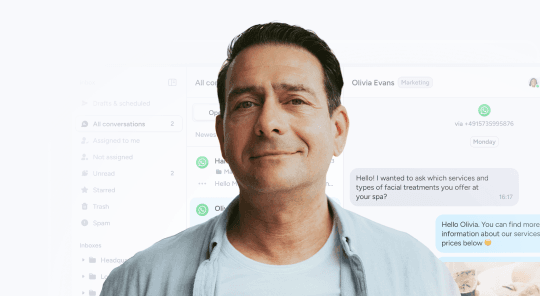
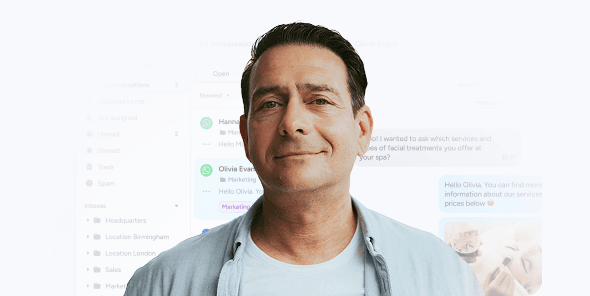
Today, the process is clearly structured. When an order comes in from the insurer, the team contacts the customer and moves them to WhatsApp. The customer sends the photos they have already taken anyway. If any shots are missing, they receive a prepared message with example photos.
Based on these, the team prepares the cost estimate and keeps the customer updated until the job is finished. An appointment is only arranged if the car really needs to be on site.
There is no getting around WhatsApp on the website either. Every page prominently says "Report damage on WhatsApp". Anyone who wants to call is asked to send a WhatsApp message and gets a call back.
Superchat is complemented by a separate, customised CRM tool in which the team manages reminders for approvals and signatures. As a result, more messages go out proactively to customers and insurers than enquiries come in.
Alongside private customers, the Keles Gruppe also uses Superchat to coordinate with car dealerships that bring in vehicles for repair. The business is a Tesla Approved Bodyshop and certified for premium brands such as Bentley, Lamborghini, Ferrari and McLaren.
Tesla plays a special role here: Keles started assessing damage via WhatsApp on his private phone with Tesla drivers, because for them the smartphone is practically part of the car. For Keles, WhatsApp is more than just a channel. It changes the relationship with the customer.
More customers, better reviews, a strong team
The most visible success is the customer reviews. The Keles Gruppe has 870 Google reviews with an average of 4.9 stars. In the reviews, "communication" is the second most frequent term with 106 mentions, right behind "repair". "WhatsApp" comes third with 82 mentions.
The number of customers has also risen significantly, because the team can handle far more enquiries. Instead of 15 to 20 minutes per on-site appointment, damage assessment happens digitally. Around 90% of communication goes through WhatsApp, and phone calls have dropped considerably. The job is often won before the car has even arrived at the workshop.
The effect is also visible in the team. Since introducing Superchat, Keles has hired three new employees. They were up to speed in a short time and now look after every customer independently, including cost calculations.
This is made possible by full transparency in the shared inbox: all customer conversations are visible to the whole team. That way, anyone can take over at any time and learns from their colleagues' replies along the way.
On top of that comes stronger customer loyalty. Anyone who has reported damage via WhatsApp once expects the same service from other workshops. Customers simply pass the contact on to friends, and even complaints have become easier: instead of driving to the workshop, customers send a photo.
Modern craftsmanship starts with customer service
The Keles Gruppe shows how a trade business can rethink its customer communication. The repair itself is still done by hand. Everything around it runs quickly, transparently and where customers already are. Superchat is the link between the team and its customers.
Next, Keles is planning an AI agent that drafts replies for the team to simply approve. The aim is for one employee to be able to look after up to 80 customers instead of 20. Connecting the Outlook mailbox to Superchat is also on the list.
His advice to other businesses is clear: put the customer first and just give it a try.